

The bank attacker who asked AI for résumé help
The attacker wanted a security researcher résumé that included the results of the attacks. Requests about selling leaked data were in the records too. Investigators found the conversations on the attacker’s own servers.
 bufferAbout the author4 min read
While investigating attacks on South Korean financial institutions, CrowdStrike came across a request for help writing a résumé. The user wanted Claude to draft a security researcher résumé and specifically include the results of ARTEX-related attacks.
The material came from servers controlled by the attacker. Publicly accessible directories held Claude Code conversations, ARTEX configuration files and Claude memory files. Along with clues about the software, the records preserved requests about what the person using it wanted to do next.
The questions included where to sell the data
The report describes requests about where people usually sell data leaked from Korean organizations, and for help finding relevant Telegram trading groups. Those requests do not establish that a sale took place. They do give investigators more context about the intended use of the stolen information.
Résumé writing and finding useful contacts are ordinary reasons to open an AI assistant. The attacker appears to have brought those errands into the same workflow as the technical work. That left a record with rather more context than a piece of attack code: questions about buyers sat alongside instructions for presenting the activity as professional experience.
The résumé prompt also included personal details. CrowdStrike could not definitively link them to the attacker, so they do not establish an identity.
ARTEX is an AI-driven penetration testing tool. The instance in this investigation mainly used DeepSeek v4.1-flash, while other Claude Code sessions used models from other providers. The public evidence does not reconstruct the precise division of work between the human operator and the models.
The ARTEX developer stopped public updates
CrowdStrike published its report on October 7. The next day, ARTEX developer Autumn-27 posted a statement on GitHub denying involvement. The tool had been intended for learning, research and authorized security testing, the developer said. The project would stop receiving updates, become closed source and no longer offer public releases or maintenance support.
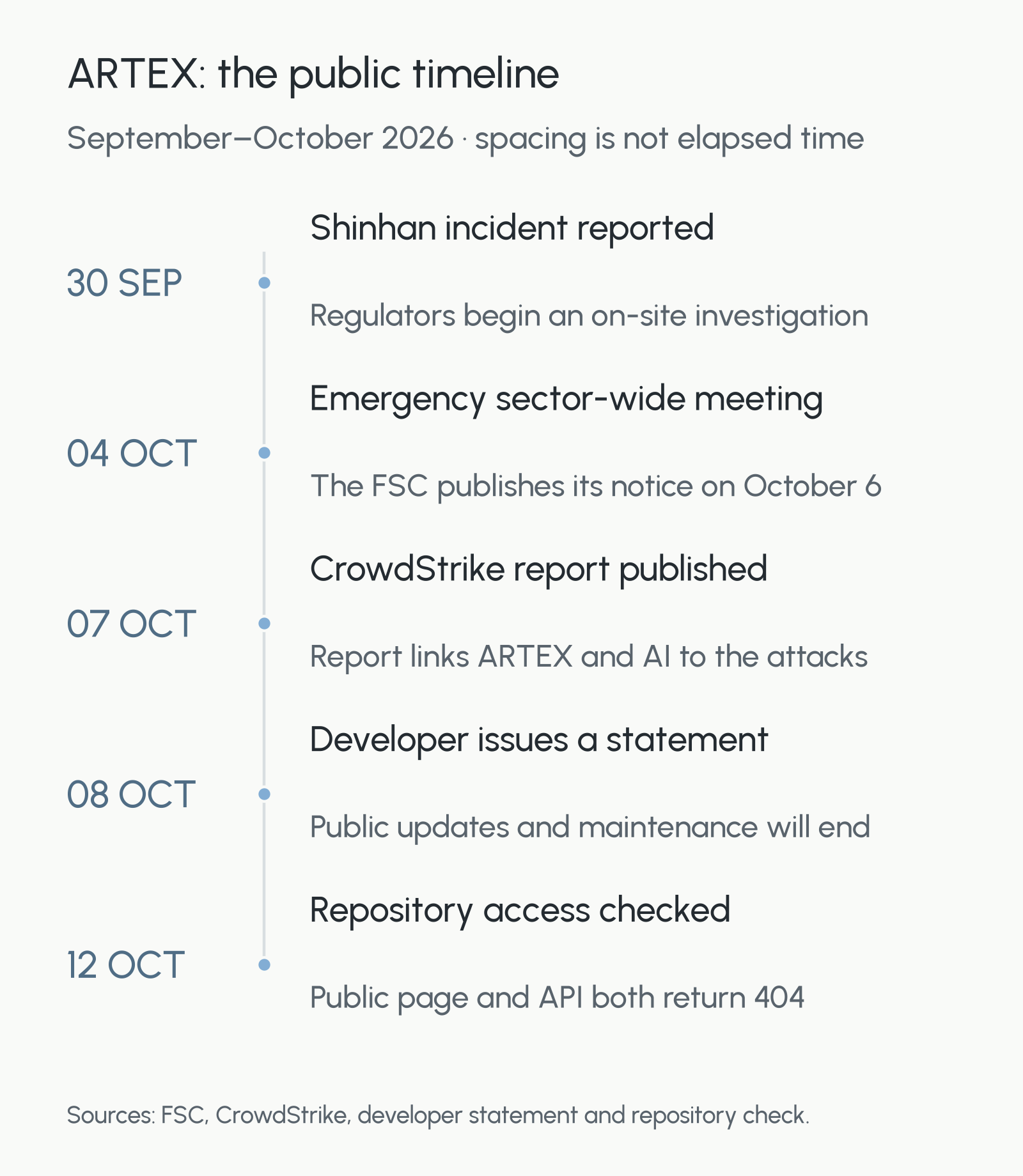
By October 12, both the original repository’s public page and its API endpoint returned 404. That response cannot distinguish a deleted repository from a private one. The old public entry point was no longer available.
The developer could stop distributing and maintaining the project. Copies already downloaded could still run, and their users could keep modifying them. Closing the original repository would not recall those copies.
Customers had handed their details to a bank
The attacks, which ran from late September into early October, resulted in data being taken. Local reporting cited by CrowdStrike described affected services including a loan application progress checker used by brokers and a mobile work system used by bank employees.
Those are part of an ordinary loan application. A broker checks its progress; an employee processes the paperwork. The customer knows which bank received their information, but may have no idea how many staff and contractor systems can retrieve it.
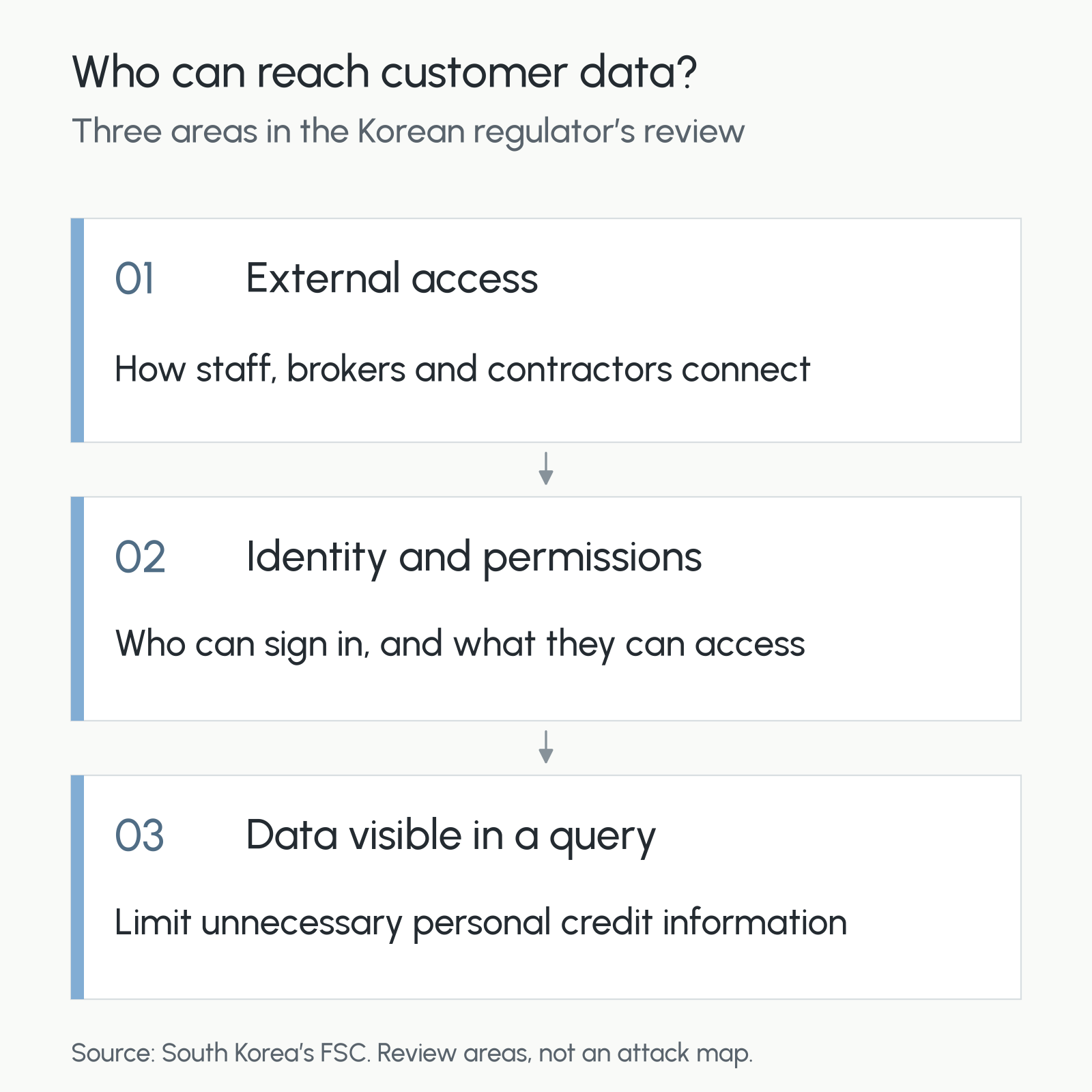
South Korea’s Financial Services Commission called for banks to reduce unnecessary personal credit information held or accessible in these systems. It also asked them to restrict access and the information a user could query. A page that only needs to show an application’s progress may not need to reveal everything in the customer’s file.
The regulator also called for affected customers to be notified and for precautions against follow-up phone and text scams. Imagine waiting for news about a loan when an unfamiliar caller can describe your application. Judging whether the call is legitimate becomes harder than dismissing a generic sales pitch.
In the attacker’s conversations, the question was where to sell the data. For the person whose details were taken, the consequences might arrive with the next call.
Sources checked October 12, 2026. Conversation details come from CrowdStrike’s report; the full original sessions were not available to us. The attacker’s identity remains unconfirmed, and inconsistent victim counts have not been combined. The cover is an AI-generated concept illustration. Related: Claude Mods and AI workflows.